Definition
Progressive overload means the training demand increases in a way your body can recover from.
The goal is not to make every session harder. The goal is to make the right variable harder at the right time. A good progression system separates the signal from the noise: what improved, what stalled, and what needs to change next.
Choose the overload variable before the block starts. If you change the target every workout, your training log becomes a diary instead of a decision system.
Overload methods
There are more ways to progress than adding five pounds.
| Method | Best use | Example |
|---|---|---|
| Load progression | Stable compound lifts with repeatable technique | Bench press 185 x 5 to 190 x 5 |
| Double progression | Hypertrophy work, accessories, and machines | 3 sets of 8-12, add load after all sets reach 12 |
| Volume progression | Muscle groups recovering well but not growing workload | 10 weekly chest sets to 12 weekly chest sets |
| Density progression | Work capacity and repeatable session pacing | Same work completed with shorter rest |
| Quality progression | Technical lifts or movements with sloppy reps | Same load with cleaner depth, tempo, or control |
Decision framework
Use a repeatable progression check before changing the target.
If the target was 3 sets of 8-10, do not raise load until the working sets land inside the range with controlled execution.
If RPE jumped faster than performance, the lift may need another exposure before load increases.
A lift can stall because the muscle group is undertrained, overtrained, or inconsistent. Volume gives context to the set result.
Missed sessions change the meaning of the data. A plateau after inconsistent weeks is usually not the same problem as a plateau after clean adherence.
Tracking system
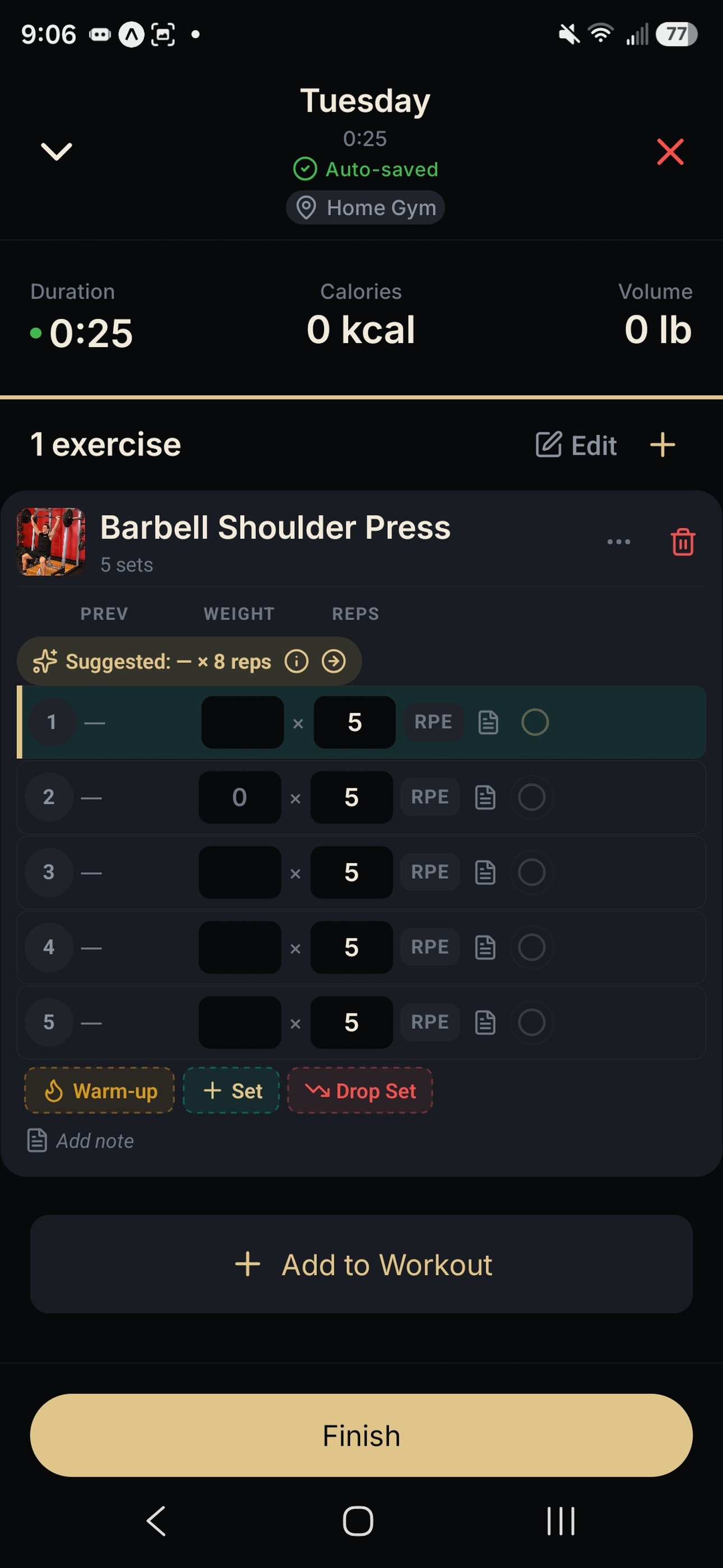
The best progressive overload tracker records inputs, signals, and decisions.
- Sets, reps, load, rest
- RPE and notes
- Exercise variation
- Program day
- Estimated strength trend
- Weekly volume trend
- PR movement
- Workout adherence
- Increase load
- Add reps
- Hold target
- Deload or reduce volume
Common mistakes
Most overload failures are tracking failures.
PRs are outcomes. Without volume, effort, and adherence, you cannot see what produced them.
New exercises, new rep ranges, new rest times, and new splits make progression harder to interpret.
If performance drops while effort climbs, forcing load increases can turn a short fatigue dip into a longer plateau.
Progression cluster