Progression rule
Keep the movement pattern stable long enough to read the result.
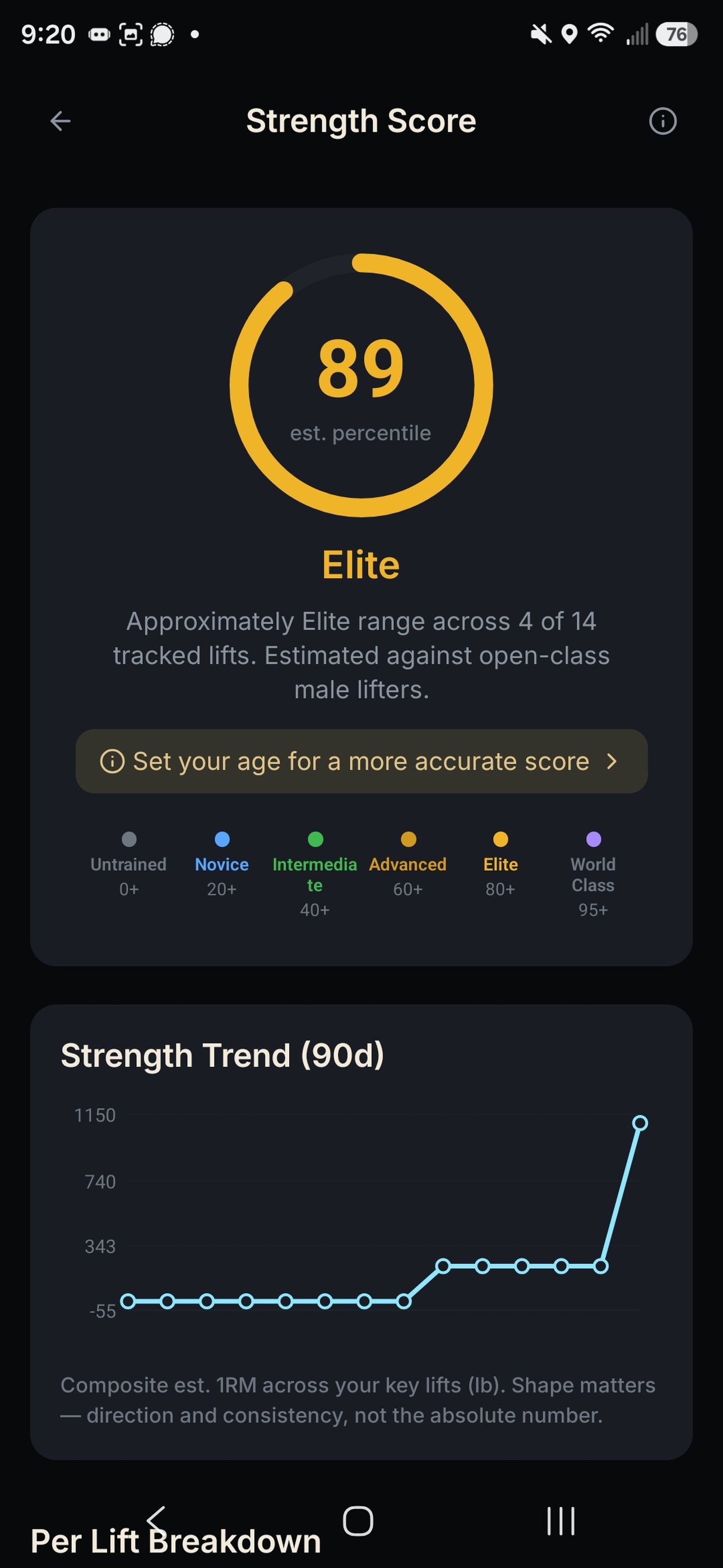
Squat progress often looks slow because the lift includes more whole-body fatigue than a smaller movement. Progress is cleaner when the same stance, depth, and loading structure repeat long enough for the trend to mean something.
A squat block should tell you whether you need more stimulus, more recovery, or a smaller load increment.
Progress signals
Loss of depth usually means fatigue or setup drift.
Load jumps should be small and repeatable.
Heavy squat blocks need more recovery than most accessories.
Volume context
Squat volume should be tracked with the rest of the lower-body workload.
| What to watch | Why it matters | What to do |
|---|---|---|
| Quads | Main driving muscle for many squat variants | Add sets if the squat is underdeveloped |
| Glutes | Helps maintain drive through the sticking point | Increase if the lift dies out of the hole |
| Lower-back fatigue | Can cap weekly frequency | Reduce if recovery is falling behind |
Common mistakes
Bad reps inflate the log and hide the actual progression problem.
The squat often stalls when too many hard sets are stacked too close together.
Different stance and depth choices make the trend hard to interpret.
Related pages