Recovery begins with the time elapsed since the muscle was last trained, not a generic rest-day count.
Methodology
NEPSYN measures progression with estimates, not inflated claims.
The app is designed to make strength progression easier to read. It uses the data you put in the app to estimate strength, model recovery, and contextualize AI coaching, while staying explicit about what each signal can and cannot tell you.
Core signals
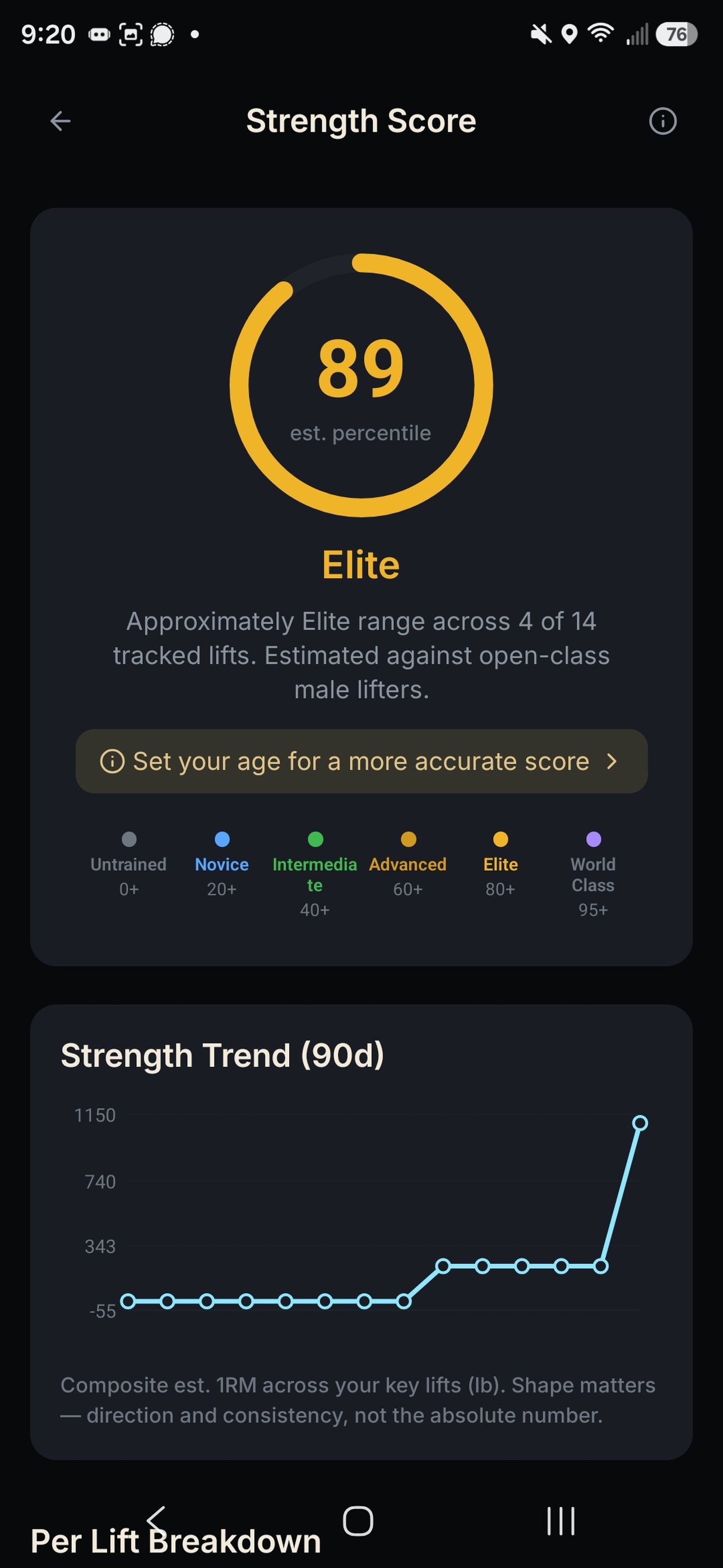
Strength score
Estimated, not exact
Uses lift type, bodyweight ratio, age band, and sex setting to place a lift in a relative tier.
Recovery score
Fatigue-aware
Looks at time since last session, muscle-group recovery windows, and session volume before labeling a muscle as ready.
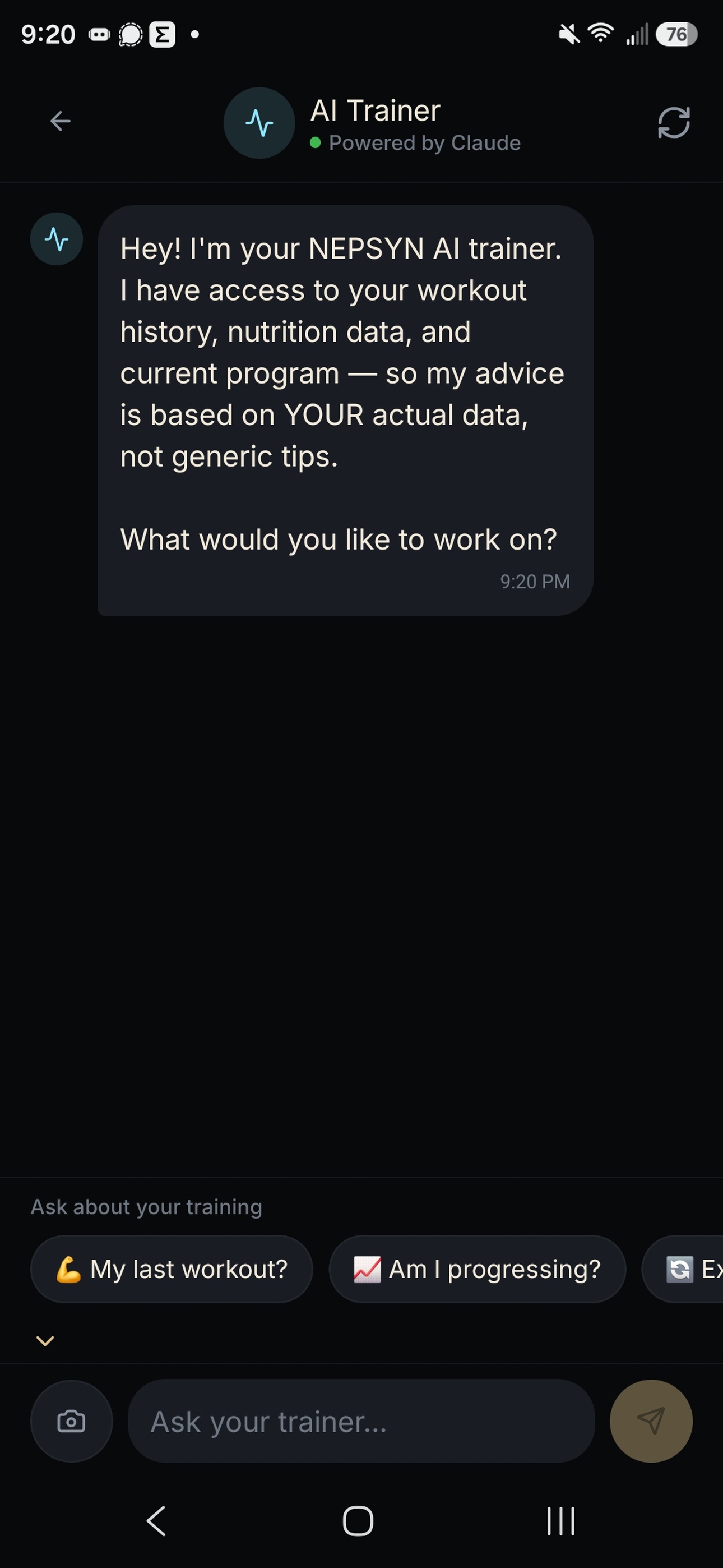
AI context
Uses your data
The trainer can use the workout history, profile, nutrition goals, and image you choose to send it.
Strength score
What the score means
NEPSYN treats strength score as a directional estimate against similar lifters, not a lab measurement. Missing data is handled conservatively: the app skips lifts without data instead of counting them as zero, and it uses open-class or unspecified fallbacks when demographic data is incomplete.
| Signal | Inputs | What it reads as | What it is not |
|---|---|---|---|
| Strength score | Best set, bodyweight, lift type, age band, and sex setting | A tiered estimate that helps compare progress over time | An exact percentile or competition result |
| Recovery score | Last trained date, muscle group, and session volume | How recovered a muscle is and whether it should be trained again | Medical advice or injury diagnosis |
| AI coaching context | Workout history, profile, nutrition goals, and optional image input | Context for a coaching-style response based on your own training data | A guarantee of correctness or a substitute for professional care |
Recovery model
Heavier, higher-volume sessions extend the recovery window more than a light accessory session.
Larger compound movers carry more systemic fatigue than small isolation muscles, so they weigh more in the overall score.
Fallback behavior
If a muscle has not been trained recently, NEPSYN marks it as recovered. If a user has incomplete demographic information, the score falls back to the most conservative available estimate instead of guessing a precise rank.
AI coaching
What it does not claim
Recovery and coaching guidance are training aids. They are not a diagnosis or a replacement for medical advice.
The strength score is useful for comparison, but it is still an estimate based on public reference ranges and demographic context.
AI output can be useful, but it still needs human review. The app shows context so users can judge the recommendation themselves.
Explore more